Introduction
Energy plays an essential role in modern society. From powering homes and industries to supporting transportation, agriculture, healthcare and digital infrastructure, electricity and fuel are necessary for everyday life. As global energy demand continues to evolve, understanding where energy comes from and how it affects the environment has become increasingly important.
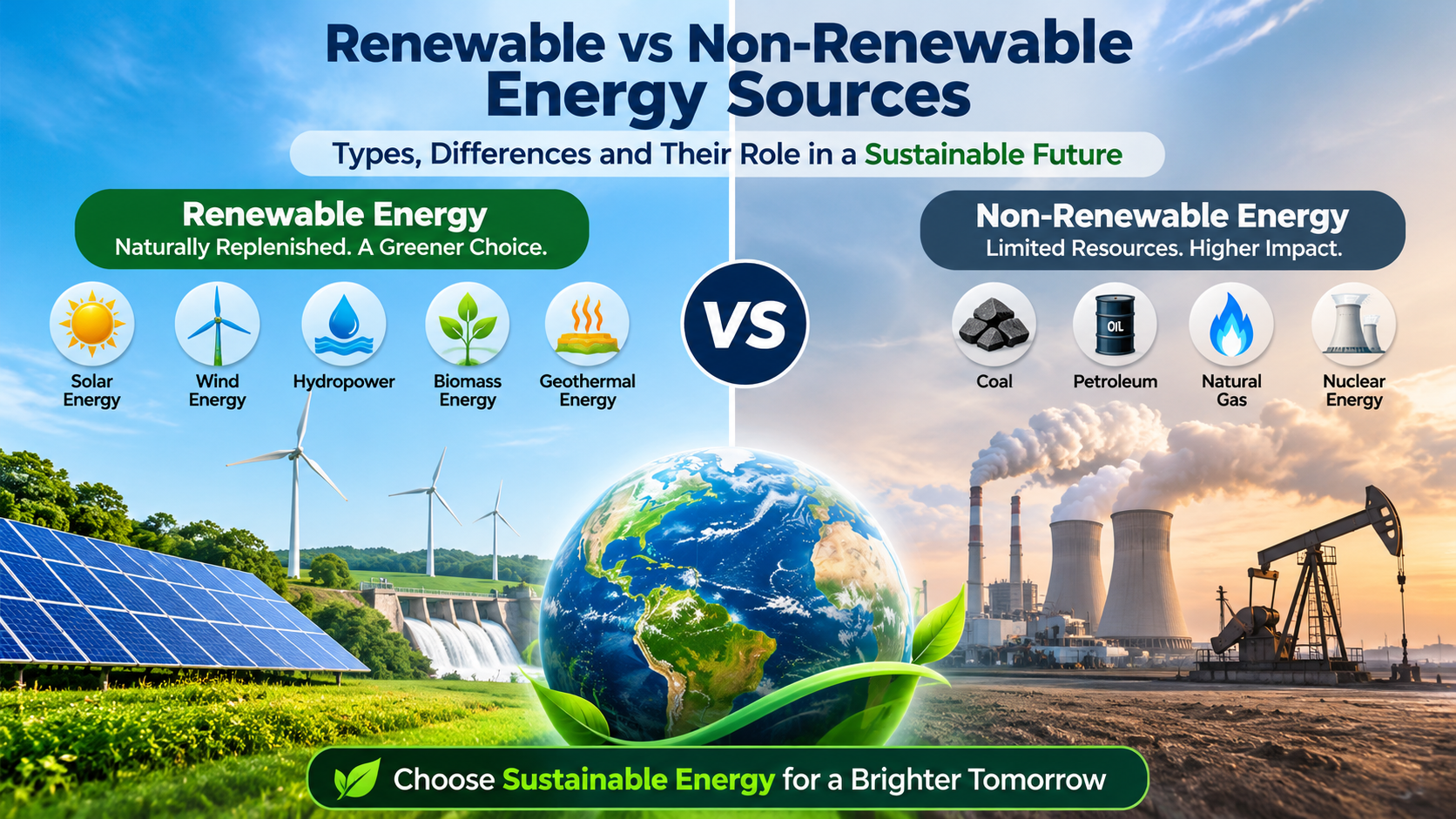
Energy resources are broadly classified into two categories: renewable and non-renewable energy sources. Both contribute significantly to electricity generation and economic development, but they differ in availability, environmental impact, long-term sustainability and operating characteristics.
Renewable energy sources, such as solar, wind and hydropower, are naturally replenished, while non-renewable sources, including coal, petroleum and natural gas, exist in limited quantities and take millions of years to form.
Understanding the difference between renewable and non-renewable energy helps individuals, businesses and industries make informed decisions about energy consumption and sustainable development. Explore the different energy sources, their advantages, limitations and role in shaping the future of power generation.
What Are Renewable Energy Sources?
Renewable energy refers to energy generated from natural resources that are continuously replenished through natural processes. These resources are available over extended periods and can support long-term energy production when managed responsibly.
Renewable energy is increasingly important because it provides alternatives to conventional fossil fuels and can help reduce greenhouse gas emissions.
Major Types of Renewable Energy
1. Solar Energy
Solar energy is obtained from sunlight and converted into electricity or heat using technologies such as solar photovoltaic (PV) panels and solar thermal systems.
Solar power is widely used in residential buildings, commercial establishments, industrial facilities and large-scale solar power plants.
Key benefits include:
Abundant natural availability.
Reduced dependence on conventional electricity sources.
Low operating and maintenance requirements.
Suitable for rooftop and large-scale installations.
Supports cleaner electricity generation.
2. Wind Energy
Wind energy uses the movement of air to rotate wind turbine blades, which drive generators to produce electricity.
Wind farms can be installed on land or offshore, depending on wind conditions and geographical suitability.
Major advantages include reduced operational emissions, renewable fuel availability and the ability to generate electricity at utility scale.
3. Hydropower
Hydropower generates electricity by using moving or falling water to operate turbines connected to generators.
Hydroelectric power plants can provide dependable electricity, and some facilities also support energy storage through pumped-storage systems.
However, hydropower projects require careful planning because dams and water infrastructure can affect ecosystems, aquatic habitats and local communities.
4. Biomass Energy
Biomass energy comes from organic materials such as agricultural residues, forestry waste, plant matter and certain biodegradable materials.
These resources can be converted into heat, electricity or biofuels through different technologies.
When sustainably sourced and properly managed, biomass can support waste utilisation and diversify the energy supply.
5. Geothermal Energy
Geothermal energy uses heat stored beneath the Earth's surface to produce electricity or provide heating and cooling.
It can offer relatively consistent energy production in locations with suitable underground heat resources.
What Are Non-Renewable Energy Sources?
Non-renewable energy comes from natural resources that are available in limited quantities. These resources generally take millions of years to form, making them impossible to replenish within a human timescale.
Non-renewable energy has historically supported industrial development, transportation, electricity generation and economic growth.
Major Types of Non-Renewable Energy
1. Coal
Coal is a fossil fuel formed from ancient plant material subjected to heat and pressure over geological periods.
It is widely used in thermal power plants, where combustion produces heat that generates steam to operate turbines.
However, burning coal releases carbon dioxide and other pollutants, contributing to climate change and air pollution.
2. Petroleum (Oil)
Petroleum is a liquid fossil fuel extracted from underground reservoirs and refined into products such as petrol, diesel, aviation fuel and other petroleum-based materials.
It is particularly important for transportation, manufacturing and industrial applications.
Its disadvantages include greenhouse gas emissions, environmental risks from extraction and transportation, and finite availability.
3. Natural Gas
Natural gas is primarily composed of methane and is used for electricity generation, heating, cooking and industrial processes.
Compared with coal, natural gas generally produces lower carbon dioxide emissions per unit of electricity generated when burned. However, methane leakage during production and transportation can significantly affect its overall climate impact.
4. Nuclear Energy
Nuclear energy is produced through nuclear reactions, commonly the fission of uranium in commercial power plants.
Although uranium is a finite resource and nuclear energy is therefore generally classified as non-renewable, nuclear power produces very low operational greenhouse gas emissions.
Its challenges include radioactive waste management, high construction costs and stringent safety requirements.
Difference Between Renewable and Non-Renewable Energy Sources
The primary difference between renewable and non-renewable energy is how quickly their natural resources can be replenished.
Renewable sources are naturally replenished, whereas non-renewable resources are finite and can become depleted.
Comparison Factor | Renewable Energy | Non-Renewable Energy |
|---|---|---|
Availability | Naturally replenished | Limited natural reserves |
Examples | Solar, wind, hydro, biomass | Coal, oil, natural gas, uranium |
Environmental impact | Generally lower operational emissions | Fossil fuels produce significant emissions |
Fuel availability | Often naturally available | Requires extraction and processing |
Operating costs | Generally lower fuel costs | Often dependent on fuel prices |
Initial investment | Can require significant installation costs | Depends on technology and infrastructure |
Sustainability | Supports long-term energy supply | Limited by resource availability |
Energy generation | May depend on natural conditions | Often dispatchable, depending on technology |
Both energy categories have different characteristics, and their suitability depends on energy requirements, geographical conditions, infrastructure and environmental considerations.
Advantages of Renewable Energy
Renewable energy is becoming an important part of modern energy planning because of its environmental and economic benefits.
1. Reduced Environmental Impact
Solar and wind power generate electricity without direct combustion emissions during operation. This can help reduce dependence on fossil fuels and lower the carbon intensity of electricity generation.
2. Long-Term Energy Availability
Natural resources such as sunlight and wind are continuously replenished, making them valuable for long-term energy planning.
3. Lower Fuel Expenses
Solar and wind installations do not require purchased fuel to generate electricity. This can reduce exposure to conventional fuel price fluctuations.
4. Supports Energy Independence
Local renewable energy projects can diversify electricity supplies and reduce dependence on imported fossil fuels.
5. Creates New Economic Opportunities
Renewable energy development supports employment opportunities in engineering, manufacturing, installation, operations and maintenance.
Disadvantages of Renewable Energy
Despite its advantages, renewable energy also has certain limitations.
Weather dependency: Solar and wind generation depend on sunlight and wind conditions.
Initial investment: Installing renewable energy infrastructure can require substantial upfront capital.
Storage requirements: Battery energy storage and other flexibility solutions may be needed to balance variable electricity generation.
Land requirements: Large-scale renewable projects can require considerable land and careful environmental planning.
Grid integration: Renewable energy expansion may require improvements to transmission, distribution and grid management systems.
Energy storage, hybrid power systems and improved grid infrastructure can help address several of these challenges.
Advantages and Disadvantages of Non-Renewable Energy
Non-renewable energy continues to play an important role in many electricity systems because of its established infrastructure and ability to provide dispatchable power.
Advantages
Established infrastructure: Conventional power plants and fuel distribution networks are already widely developed.
Dispatchable generation: Many fossil-fuel power plants can adjust electricity generation according to demand.
High energy density: Fossil fuels contain substantial energy in relatively small quantities.
Industrial applications: Coal, oil and natural gas support several manufacturing and industrial processes.
Existing supply chains: Established extraction, transportation and distribution systems support conventional energy consumption.
Disadvantages
Resource depletion: Fossil fuel reserves are finite and cannot be replenished within a human lifetime.
Greenhouse gas emissions: Burning fossil fuels releases carbon dioxide and contributes to climate change.
Air pollution: Conventional fuel combustion can release pollutants that affect air quality and human health.
Price fluctuations: Global fuel prices can be affected by geopolitical events, supply disruptions and market conditions.
Environmental damage: Extraction, mining and transportation can affect land, water resources and ecosystems.
Why Is Renewable Energy Important for India's Future?
India's growing population, expanding industries and increasing electricity requirements make reliable and sustainable energy infrastructure essential.
Renewable energy can contribute to India's long-term development by diversifying its electricity mix and supporting cleaner power generation.
Solar energy is particularly promising because it can be deployed across residential rooftops, commercial buildings, industrial facilities and large utility-scale projects.
Wind power, hydropower, biomass and energy storage can further strengthen the renewable energy ecosystem.
Businesses are also increasingly exploring renewable energy solutions to manage electricity costs, improve energy resilience and support sustainability objectives.
The transition requires more than installing renewable energy systems. It also involves modernising electricity grids, improving storage capabilities, developing efficient power infrastructure and integrating different energy technologies.
How Are Hybrid Energy Systems Supporting Reliable Power Generation?
One of the important developments in modern electricity infrastructure is the integration of renewable and conventional energy technologies.
Hybrid energy systems combine two or more power sources to improve electricity availability and operational flexibility.
For example, a hybrid system may integrate:
Solar power generation.
Wind energy.
Battery energy storage systems.
Diesel or gas-based backup generators.
Intelligent energy management systems.
During periods of strong solar or wind generation, renewable sources can supply electricity to connected loads. Battery storage can retain excess energy for use when renewable generation decreases.
Backup generation can provide additional support when required.
These integrated solutions can help commercial facilities, industrial operations and infrastructure projects improve power reliability while increasing renewable energy utilisation.
How Is Jakson Supporting the Energy Transition?
The transition towards sustainable energy requires reliable infrastructure, innovative technologies and solutions designed for different energy requirements.
Jakson operates across energy and infrastructure sectors, with business activities that include distributed energy, solar modules and cells, infrastructure and other power-related solutions.
Its energy solutions and capabilities contribute to the development of modern power infrastructure and the growing adoption of renewable energy technologies.
As businesses explore cleaner energy alternatives, understanding renewable and non-renewable energy sources becomes an important first step towards making informed energy decisions.
To learn more about renewable and non-renewable energy sources, their different types, advantages and limitations, explore the detailed guide from Jakson:
Read more: https://www.jakson.com/blogs/renewable-and-non-renewable-energy-sources-types-guide/
Frequently Asked Questions (FAQs)
1. What is the main difference between renewable and non-renewable energy?
Renewable energy comes from naturally replenished resources such as sunlight, wind and water. Non-renewable energy comes from finite resources such as coal, petroleum, natural gas and uranium that cannot be replenished within a human timescale.
2. What are the five main types of renewable energy?
The five commonly recognised types are solar energy, wind energy, hydropower, biomass energy and geothermal energy.
3. What are the four major types of non-renewable energy?
Coal, petroleum, natural gas and nuclear energy are commonly classified as non-renewable energy sources because their fuel resources are finite.
4. Why is renewable energy better for the environment?
Renewable energy technologies such as solar and wind generally produce electricity with very low operational greenhouse gas emissions. They can reduce dependence on fossil fuels and help lower the environmental impact of electricity generation.
5. Is renewable energy available 24 hours a day?
Not every renewable energy source generates electricity continuously. Solar power depends on sunlight, while wind power depends on wind conditions. Battery storage, hydropower and hybrid energy systems can help improve electricity availability.
6. Is nuclear energy renewable or non-renewable?
Nuclear energy is generally classified as non-renewable because it relies on finite fuels such as uranium. However, nuclear power produces very low greenhouse gas emissions during electricity generation.
7. What is the future of renewable energy in India?
Renewable energy is expected to play an increasingly important role in India's electricity sector. Solar, wind, hydropower, energy storage and modern grid infrastructure will contribute to meeting future energy requirements.
8. How can businesses benefit from renewable energy?
Businesses can use renewable energy to diversify electricity supplies, reduce exposure to conventional fuel price changes, support sustainability goals and potentially lower long-term energy expenses.
Conclusion
Renewable and non-renewable energy sources have both contributed to modern economic and industrial development. However, their differences in availability, environmental impact and long-term sustainability make it important to understand how each source fits into the evolving energy landscape.
Renewable energy technologies such as solar, wind, hydropower, biomass and geothermal power offer opportunities to develop cleaner and more sustainable electricity systems. At the same time, reliable infrastructure, energy storage and hybrid power solutions remain essential for meeting changing electricity requirements.
For India and the rest of the world, the future of energy will depend on innovation, responsible resource management and the effective integration of different power technologies.
By understanding the advantages and limitations of each energy source, individuals and organisations can make better-informed decisions and contribute to a more reliable and sustainable energy future.
Explore more insights on renewable and non-renewable energy sources with Jakson: https://www.jakson.com/blogs/renewable-and-non-renewable-energy-sources-types-guide/
Edited by Rajat Chauhan. How articles here are written and edited.
0 comments
Sign in to join the discussion.
Loading comments…