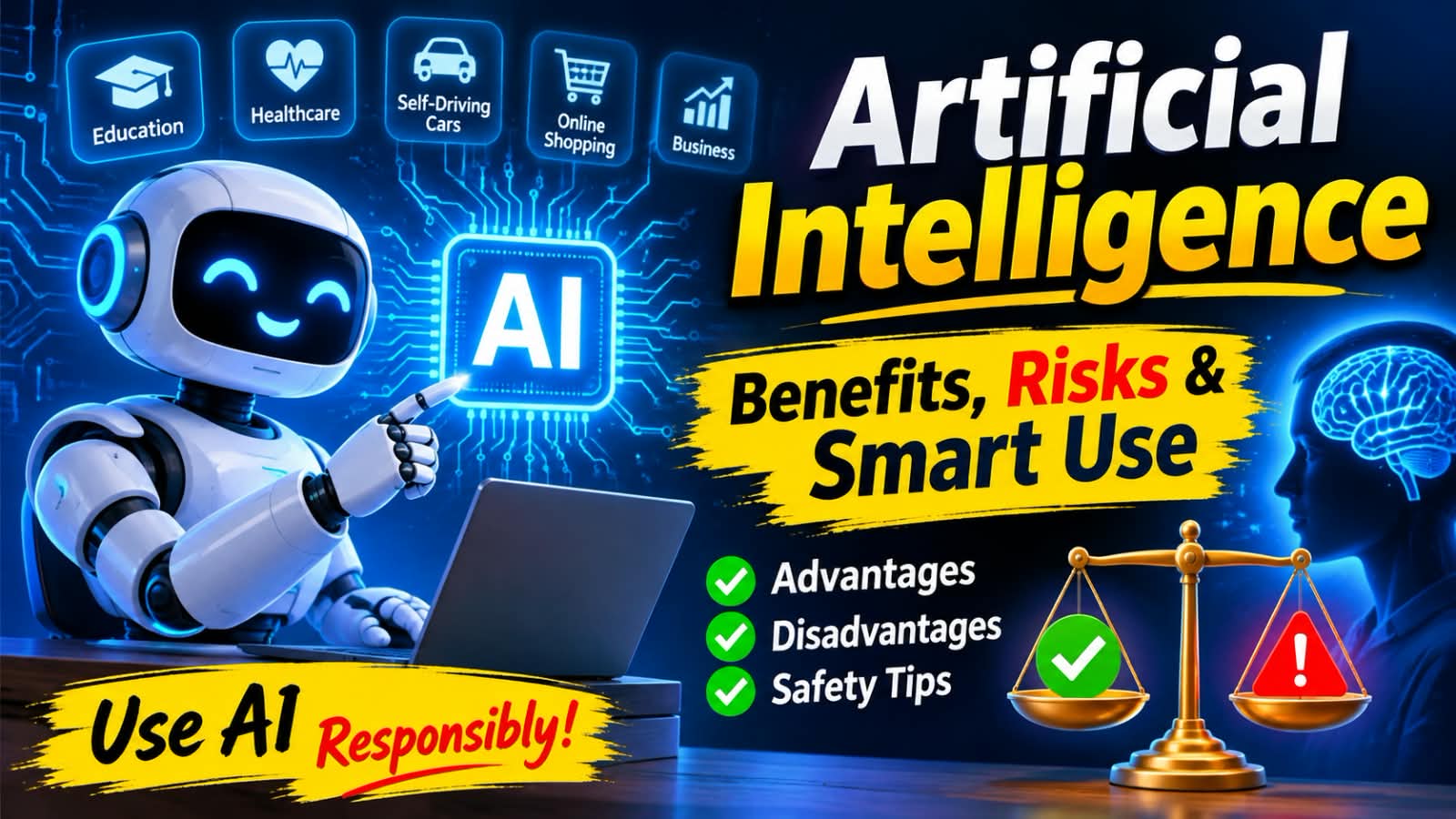
Artificial Intelligence, commonly known as AI, is becoming a part of our everyday lives.
From asking questions on ChatGPT to using Google Maps, online shopping recommendations, and smartphone assistants, AI is changing how people work, learn, and communicate.
But one important question remains:
Can we really trust Artificial intelligence?
The answer is not a simple yes or no. AI can be extremely useful, but it can also make mistakes.
What is Artificial Intelligence?
Artificial Intelligence is a technology that allows computers to perform tasks that usually require human intelligence.
These tasks include understanding language, recognizing images, solving problems, analyzing information, and generating content
For example, when you ask an AI chatbot a question, it processes your words and generates a response based on patterns learned from large amounts of data
AI does not think or understand the world exactly like a human being. It uses mathematical models and algorithms to produce results.
AI Is Already Part of Your Daily Life
Many people think AI is only used by scientists or technology companies. However, it is already present in several everyday activities.
Here are some common examples:
Smartphones use AI for facial recognition and camera improvements.
Google Maps uses it to estimate traffic and travel times.
Email services use it to identify spam messages.
Streaming platforms recommend movies and videos based on viewing habits.
You may be using AI several times a day without even noticing it.
AI Can Save Time and Improve Productivity
One of the biggest advantages of AI is its ability to help people complete certain tasks faster.
Students can use AI to understand difficult subjects, summarize study material, and practice new languages.
Employees can use AI tools to organize information, prepare drafts, analyze data, and generate ideas.
Small businesses can use AI to improve customer support and automate repetitive tasks.
However, AI should be treated as an assistant rather than a complete replacement for human thinking and decision-making.
AI Can Sometimes Give Wrong Answers
This is one of the most important things users should understand.
AI systems can sometimes generate information that sounds confident but is incorrect. This is often called an AI hallucination.
For example, an AI chatbot might provide an incorrect historical date, invent a research paper, or give outdated information about a product.
Why does this happen?
AI models generate responses based on patterns in their training data and the information available to them. They do not automatically verify every statement before presenting it.
Therefore, important information should always be checked using reliable sources.
Your Privacy Matters When Using AI
AI tools can process the information users enter into them. That makes privacy an important consideration.
Avoid entering sensitive information such as:
Bank account details and passwords.
Personal identification numbers.
Private medical records.
Confidential company information.
Other people's personal information without permission.
Before using an AI application, read its privacy policy and understand how it handles your data.
Being careful about what you share online is an important digital safety habit.
Will AI Replace Human Jobs?
AI is changing the workplace, but its impact is different across industries.
Some repetitive tasks can be automated, while other jobs require human creativity, communication, practical skills, and responsibility.
For example, AI can help a customer support employee prepare responses, but handling an emotional or complicated customer situation may still require human judgement.
Instead of only worrying about AI replacing jobs, people should focus on learning skills that work well alongside AI.
Some useful skills include:
Communication and problem-solving.
Critical thinking.
Data analysis.
Digital literacy.
Creative thinking.
Learning how to use AI tools effectively may create new career opportunities.
How Can You Use AI Smartly and Safely?
You do not need to be a technology expert to use AI responsibly.
Follow these simple practices:
Verify important information before believing or sharing it.
Never depend entirely on AI for financial decisions.
Protect your passwords and private information.
Compare AI answers with trusted sources.
Use AI to learn new things instead of blindly copying answers.
Remember that AI-generated images, videos, and text can sometimes be misleading.
A little awareness can make your experience with AI much safer and more productive.
Final Thoughts
Artificial Intelligence is one of the most important technologies shaping the modern world. It can help us learn faster, save time, solve problems, and explore new opportunities.
However, AI is not perfect. It can make mistakes, produce misleading information, and create privacy concerns.
The smartest approach is not to trust AI blindly or reject it completely. Instead, learn how it works, understand its limitations, and use it responsibly.
AI can be a powerful tool, but human judgement still matters.
Edited by Rajat Chauhan. How articles here are written and edited.
0 comments
Sign in to join the discussion.
Loading comments…