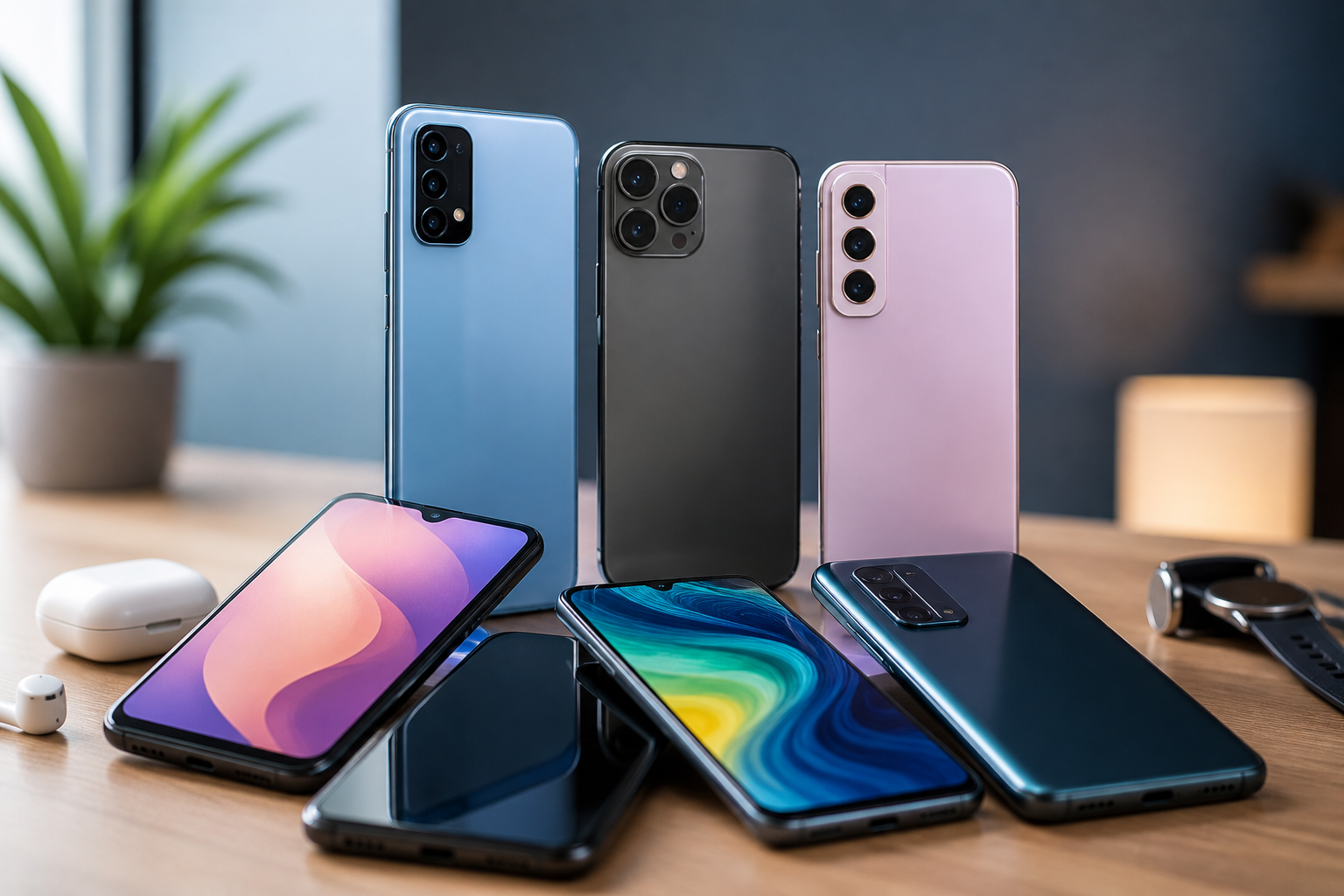
Mobile phones have become an essential part of our daily lives. From communication and online education to entertainment, shopping, banking and business, smartphones help people perform numerous tasks quickly and conveniently. With new technologies emerging every year, modern mobile phones offer powerful processors, high-quality cameras, long-lasting batteries and advanced security features.
Whether you are planning to buy your first smartphone or upgrade your existing device, this guide covers the features worth comparing, what a smartphone does for you, and how to choose one on your budget.
What Is a Mobile Phone?
A mobile phone is a portable electronic device that allows users to make calls, send messages, access the internet, and use various applications. Modern smartphones offer advanced features such as GPS navigation, video recording, mobile payments, online gaming, and artificial intelligence tools.
Smartphones run on operating systems such as Android and iOS, providing access to millions of applications for personal and professional use.
Important Features to Consider When Buying a Mobile Phone
1. Processor and Performance
The processor is one of the most important components of a smartphone. It determines how efficiently your phone runs applications, handles multitasking, and performs demanding tasks.
If you frequently play games, edit videos, or use multiple applications, consider a smartphone with a powerful processor and sufficient RAM.
2. RAM and Storage
RAM helps your phone manage multiple applications simultaneously, while internal storage holds your photos, videos, documents, and applications.
For everyday activities, a phone with adequate RAM and storage may be sufficient. If you create videos, download large files, or play games, consider choosing a device with more storage capacity.
Check whether the smartphone supports expandable storage before purchasing it.
3. Camera Quality
Camera quality is an important consideration for many smartphone buyers. Modern mobile phones offer features such as portrait photography, night mode, optical image stabilization, and high-resolution video recording.
However, megapixels alone do not determine camera quality. Image processing, sensor size, lens quality, and stabilization also influence the final results.
Content creators should pay particular attention to video quality, microphone performance, and front-camera capabilities.
4. Battery Life and Charging
A smartphone with good battery life allows you to browse the internet, watch videos, attend online meetings, and use applications without charging frequently.
Before buying a phone, check its battery capacity, charging speed, and real-world battery performance.
Battery life also depends on screen brightness, network connectivity, gaming, and application usage.
5. Display Quality
The display affects your experience when watching movies, reading articles, browsing websites, and playing games.
Consider screen resolution, brightness, refresh rate, and display technology. An AMOLED display can provide rich colours and deep blacks, while a quality LCD display may also offer a good viewing experience.
Choose a screen size that feels comfortable for your everyday activities.
6. Software Updates and Security
Software updates help improve device security, fix bugs, and introduce new features.
Before purchasing a smartphone, check the manufacturer's software update policy and security support period.
You should also use a secure screen lock, install applications from trusted sources, and keep your operating system updated.
Benefits of Using a Smartphone
Smartphones offer several advantages in everyday life.
Easy Communication: Make voice calls, participate in video calls, and communicate through messaging applications.
Online Education: Access educational videos, online classes, digital books, and learning platforms.
Digital Payments: Use supported banking applications and digital payment services to make convenient transactions.
Entertainment: Watch videos, listen to music, play games, and enjoy digital content.
Business and Productivity: Manage emails, create documents, attend online meetings, and promote your business through social media.
Navigation: Use GPS-based applications to find locations, explore routes, and plan journeys.
Content Creation: Record videos, take photographs, edit content, and publish material on social media platforms.
Android vs iPhone: Which Is Better?
Android smartphones and Apple iPhones offer different advantages.
Android devices are available across a wide range of prices, designs, and specifications. They provide flexibility and allow users to choose from many manufacturers.
iPhones are known for their integration with Apple's ecosystem, consistent software experience, and strong video recording capabilities across many models.
The better choice depends on your budget, preferred applications, performance requirements, software support expectations, and personal preferences.
Compare individual models rather than assuming that every Android phone or iPhone offers the same features.
How to Choose the Best Mobile Phone on Your Budget
Follow these steps before purchasing a new smartphone:
Set your budget and identify your main requirements.
Compare processors, RAM, and storage capacity.
Check camera samples and video recording quality.
Review battery life and charging performance.
Verify software update commitments.
Compare warranty coverage and after-sales service.
Read independent reviews and check the final price from reliable sellers.
Avoid choosing a smartphone based only on advertisements or specifications. Consider how well it performs in everyday use.
Tips to Make Your Mobile Phone Last Longer
You can extend your smartphone's useful life by following a few simple practices.
Use a suitable protective case and screen protector.
Install operating system and security updates.
Avoid exposing your phone to excessive heat.
Download applications from trusted sources.
Remove unnecessary applications and files.
Back up important photographs and documents.
Use a compatible charger and follow the manufacturer's charging recommendations.
Check battery health if you notice a significant reduction in battery life.
These practices can help maintain your device's performance and protect your personal information.
Future of Mobile Phone Technology
Mobile phone technology continues to evolve. Artificial intelligence, improved cameras, foldable displays, faster connectivity, and more efficient processors are influencing smartphone development.
Future smartphones may offer better on-device AI capabilities, improved energy efficiency, and more advanced photography and communication features.
However, the availability of these technologies depends on the specific device, market, software support, and network infrastructure.
Conclusion
Mobile phones have transformed the way people communicate, work, learn, and access entertainment. Choosing the right smartphone requires careful consideration of performance, camera quality, battery life, storage, display, security, and price.
Before purchasing a new device, compare multiple models and select the smartphone that best matches your requirements and budget. A well-chosen mobile phone can provide reliable performance and useful features for years.
Edited by Rajat Chauhan. How articles here are written and edited.
0 comments
Sign in to join the discussion.
Loading comments…