There are nine main types of computer, in three groups. By size and power: supercomputer, mainframe, minicomputer and microcomputer. By how they handle data: analog, digital and hybrid. By purpose: general-purpose and special-purpose. Most textbooks ask for the four types by size first; the other two groups classify the same machines in a different way.
How many types of computer are there?
Nine, if you count the three usual classifications together. Each one asks a different question about the same machine, so one computer has a type in every group. The laptop this article was written on is a microcomputer, a digital computer and a general-purpose computer at the same time.
Classified by | Types | A real example |
|---|---|---|
Size and power | Supercomputer | LineShine, China, the fastest on the June 2026 TOP500 list |
Size and power | Mainframe | IBM z17, launched in 2025 |
Size and power | Minicomputer | DEC PDP-8, sold for 25 years |
Size and power | Microcomputer | Laptops, desktops, tablets and smartphones |
How data is handled | Analog | Telefunken RAT 700, a table-top analog computer |
How data is handled | Digital | Almost every computer in use today |
How data is handled | Hybrid | Machines that pair an analog sensor with digital processing |
Purpose | General-purpose | A laptop or phone that runs any program you install |
Purpose | Special-purpose | The controller inside a washing machine, a car engine or an ATM |
Types of computer by size
This classification of computers is the one most exams mean by "types of computer", and the most common in textbooks. It sorts machines by size, power, cost and how many people use one at a time, from the largest to the smallest.
1. Supercomputer
A supercomputer is the fastest kind of computer, built to run one enormous calculation at a time: weather and climate models, nuclear and physics simulations, drug research and AI training. It is measured in FLOP/s, floating-point operations per second, and the TOP500 list ranks the world's 500 fastest twice a year by running the same benchmark on each.
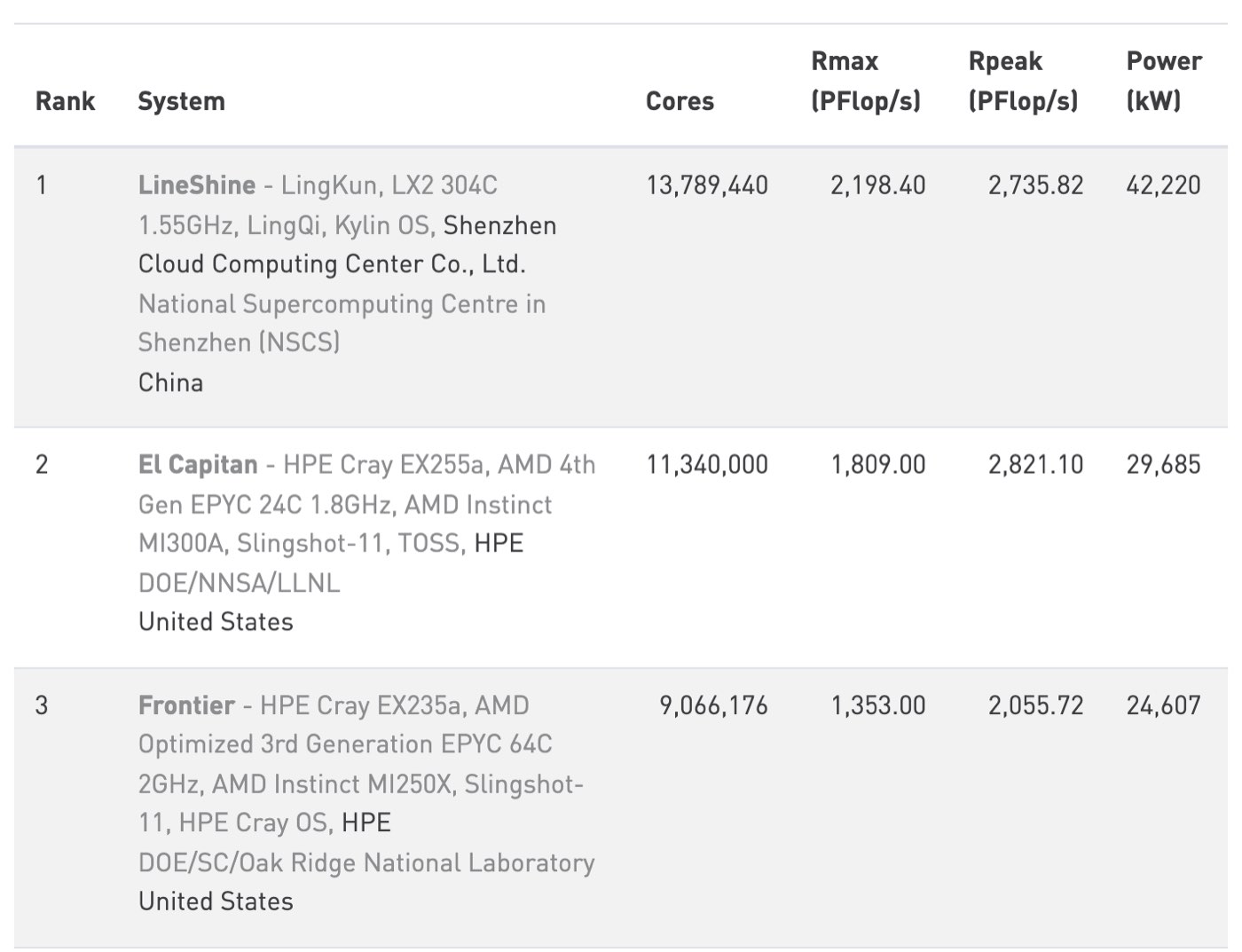
The top three of the June 2026 TOP500 list, viewed on October 18, 2026. Rmax is the speed each machine reached in the benchmark.
The fastest on the June 2026 list, LineShine at China's National Supercomputing Centre in Shenzhen, has 13,789,440 processor cores and reached 2,198.40 petaflops, about 2.2 quintillion operations a second. It draws 42,220 kilowatts, about 42 megawatts. Supercomputers are not one big box: they are rows of cabinets packed with processor boards, wired together so that millions of cores work on one problem.
India has seven machines on the same list. The highest is a Dell system at Yotta Data Services' Shakti Cloud, ranked 32nd with 84.31 petaflops. C-DAC's AI supercomputer AIRAWAT is 211th, and the weather-forecasting machines Arka (IITM, Pune) and Arunika (NCMRWF) are 219th and 274th.
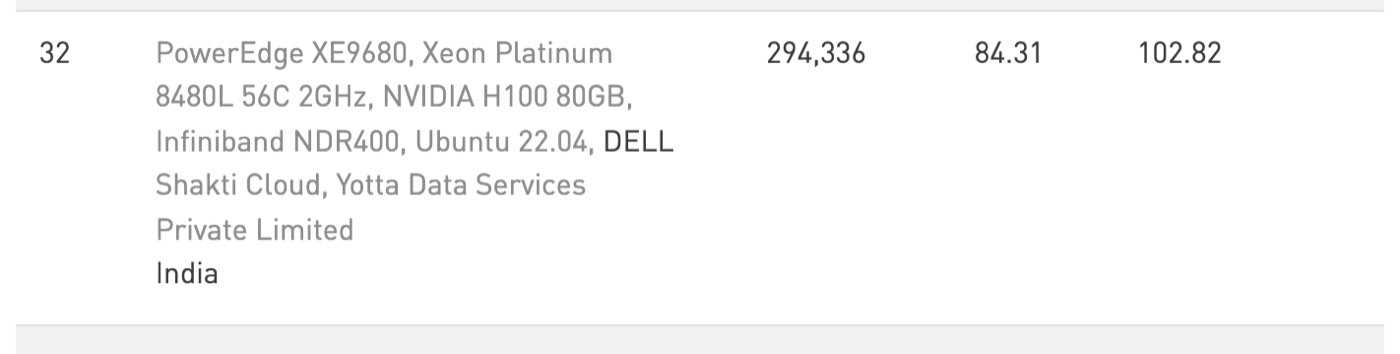
India's highest entry on the June 2026 TOP500 list, viewed on October 18, 2026.
2. Mainframe computer
A mainframe is a large, very reliable computer that handles huge numbers of small jobs at once for thousands of users: bank transactions, insurance claims, airline bookings, tax and pension records, kept in large databases. Where a supercomputer is built for raw calculating speed on one problem, a mainframe is built to process millions of separate transactions without ever stopping, and it fills one or more tall cabinets.
The current example is the IBM z17, announced on 8 April 2025 and on sale from 18 June 2025. IBM says it was "designed with the direct input of more than 100 clients" and can run "more than 450 billion inferencing operations in a day", AI checks such as scoring a card payment for fraud while it is being made.
3. Minicomputer
A minicomputer, also called a mid-range computer, sits between a mainframe and a personal computer: several users share it, through terminals, for one company or department. The Computer History Museum describes minicomputers as "smaller and simpler than mainframes", machines that "brought computers within the reach of a larger and more diverse range of customers".
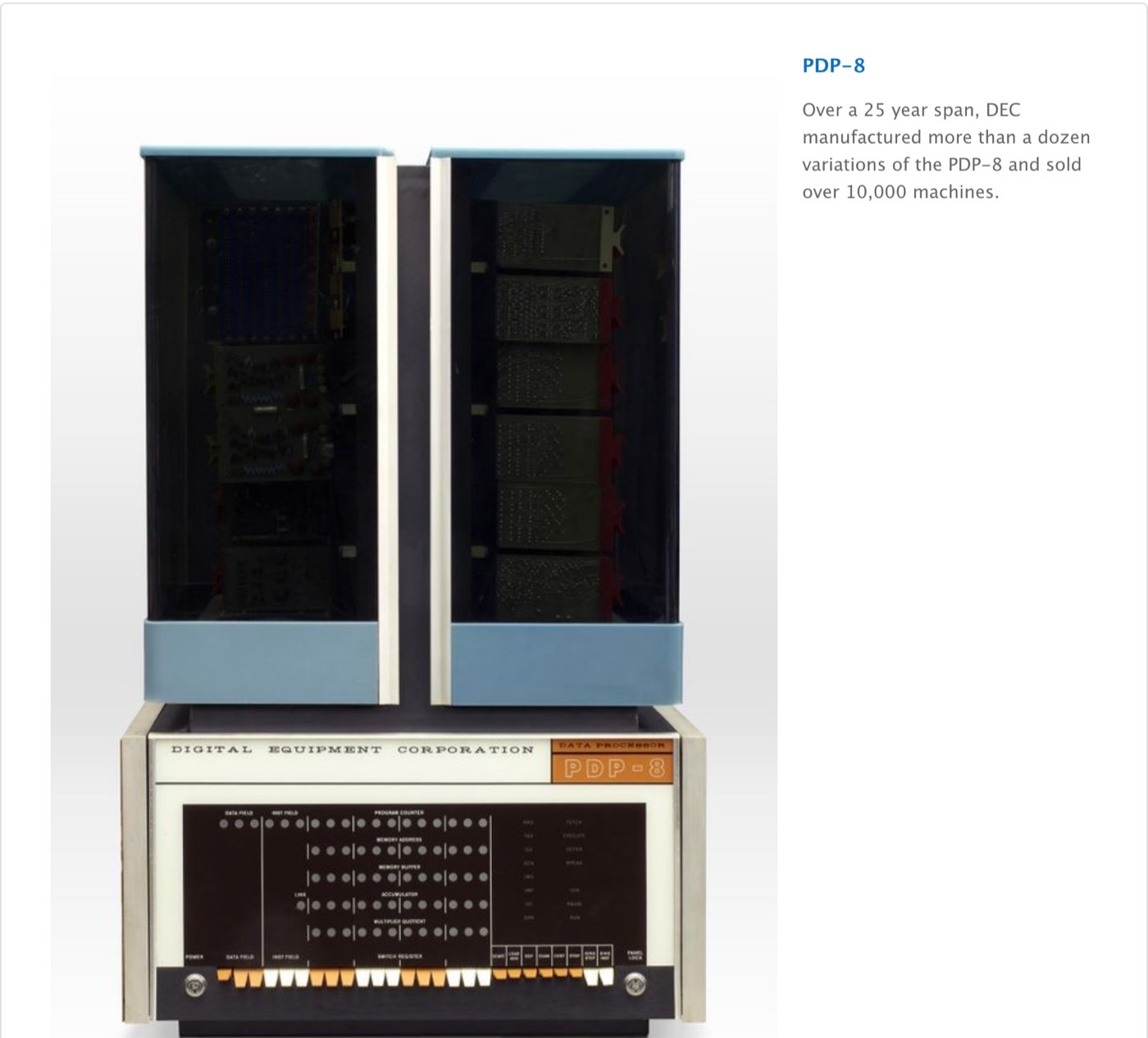
The DEC PDP-8 at the Computer History Museum, viewed on October 18, 2026.
The best-known minicomputer is the DEC PDP-8: over 25 years, DEC made more than a dozen versions and sold over 10,000 machines. The name "minicomputer" is rarely used for new machines now. Its job has passed to mid-range servers, which do the same work for a business, and to ordinary PCs.
4. Microcomputer
A microcomputer is a computer built around a single microprocessor and meant for one person at a time. It is the type almost everyone uses, and it comes in several forms:
Desktop: a PC that stays on a desk, with a separate screen and keyboard.
Laptop: a portable PC with a built-in screen, keyboard and battery.
Tablet and smartphone: touch-screen computers small enough to hold.
Wearable: a smartwatch or fitness band.
Workstation: a powerful desktop for design, engineering or video work.
Server: a computer that serves files, websites or apps to other computers over a network. Servers use the same kind of processor as a PC, but many people share one, so some books list servers as a type of their own.
Every one of these runs an operating system, such as Windows, macOS, Android, iOS or Linux, which manages its hardware and programs.
How much faster is a supercomputer than a laptop?
The microcomputer this article was written on, a MacBook Air with Apple's M2 chip (8 cores, 8 GB of memory), managed about 304 billion operations a second in the same kind of double-precision arithmetic the TOP500 benchmark uses:
MacBook Air (M2, 8 cores, 8 GB), macOS 26.6.2, numpy 2.5.4
4096 x 4096 matrix multiply, float64, 7 runs
median: 304.5 GFLOP/s    best: 311.3 GFLOP/s
Against the June 2026 list, that puts LineShine about 7.2 million times faster than the laptop, India's Shakti Cloud system about 277,000 times faster, and AIRAWAT about 28,000 times faster. It is a rough comparison, a matrix test on one laptop against a full benchmark run on a whole machine, but the scale is right: LineShine puts 13,789,440 processor cores to work on one problem, and the laptop has 8.
What is the difference between a supercomputer and a mainframe?
Supercomputer | Mainframe | |
|---|---|---|
Built for | One huge calculation as fast as possible | Millions of small transactions, reliably, at once |
Measured in | FLOP/s (floating-point operations per second) | Transactions handled and time without failure |
Used for | Weather, climate, science, AI training | Banking, insurance, bookings, government records |
Example | LineShine, El Capitan, India's AIRAWAT | IBM z17 |
Types of computer by how they handle data
This classification asks what kind of data a computer works with: continuous values, separate digits, or both.
Analog computer
An analog computer works with quantities that vary continuously, such as voltage or the turning of a shaft, and models a problem physically rather than with numbers. In the Computer History Museum's words, analog computers use "mechanical motion or the flow of electricity to model problems and generate answers quickly". They were used to solve engineering equations and in early flight simulators, and "remained the preferred tool until digital computers, based on electronic switches, became fast enough for software to do the same job."
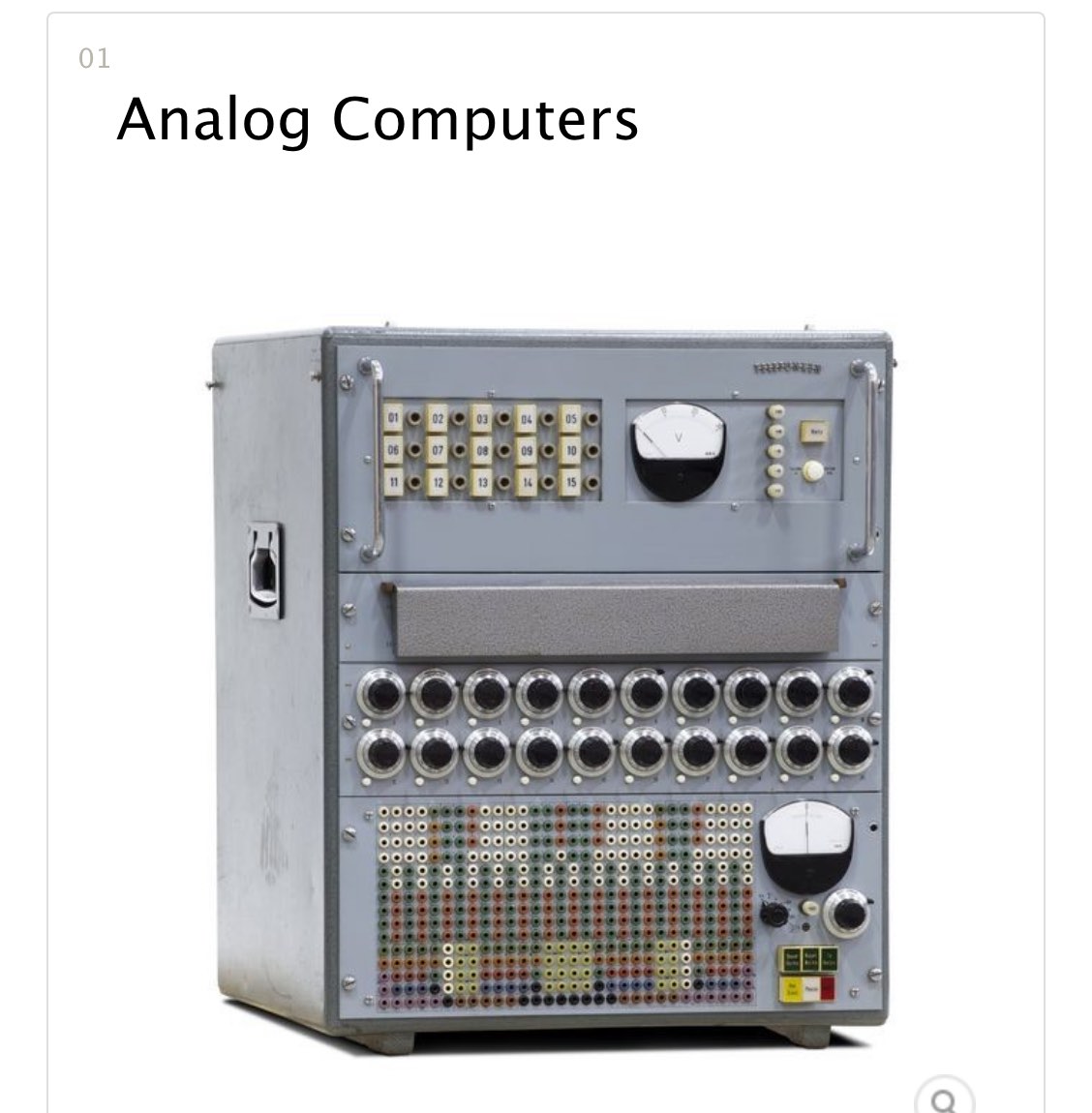
A Telefunken RAT 700/2 table-top analog computer at the Computer History Museum, viewed on October 18, 2026. Problems were set up by wiring the patch panel and turning the dials.
Digital computer
A digital computer works with data as separate values, ultimately the binary digits 0 and 1. It follows a program step by step, gives exact answers and can store them. Every machine in the size groups above is a digital computer: the supercomputers, the IBM z17, the PDP-8 and your phone.
Hybrid computer
A hybrid computer combines an analog part, which takes in continuous signals, with a digital part, which calculates and stores the results. Textbooks usually give an ECG machine or a petrol pump as the example: each measures something continuous, a heartbeat or fuel flowing, and shows it as digital numbers. Strictly, most such devices today are digital computers with an analog sensor at the front, which turns the signal into numbers before any computing is done.
Types of computer by purpose
General-purpose computers can run any program you install: a laptop can be a word processor, a game console and a video editor in the same afternoon. Desktops, laptops, tablets and phones are general-purpose.
Special-purpose computers are built for one job and run one fixed program. Most are embedded inside another machine: the controller in a washing machine or microwave, the engine computer in a car, an ATM or a traffic-light controller. They are everywhere, though most people never think of them as computers.
How these numbers were measured
Supercomputer figures are from the June 2026 TOP500 list, read on 18 October 2026. The laptop test multiplied two 4,096 by 4,096 matrices of double-precision numbers seven times with numpy, which uses Apple's Accelerate library, and counted 2n³ operations per multiplication; the script and result are saved with this article. IBM's figures are from its z17 announcement. Minicomputer and analog-computer details and photos are from the Computer History Museum. Screenshots are unedited crops of those pages.
Frequently asked questions
What are the 4 types of computer?
By size, the four types are supercomputer, mainframe, minicomputer and microcomputer. This is the classification most exams mean.
Which is the fastest computer in the world?
On the June 2026 TOP500 list it is LineShine, at the National Supercomputing Centre in Shenzhen, China, with 2,198.40 petaflops. El Capitan in the United States is second.
Which is the fastest supercomputer in India?
On the June 2026 list, a Dell system at Yotta Data Services' Shakti Cloud, ranked 32nd in the world with 84.31 petaflops. India has seven systems in the top 500.
Is a smartphone a computer?
Yes. A smartphone is a microcomputer: it has a processor, memory and storage, runs an operating system and can run any app you install, so it is also a general-purpose digital computer.
What is the difference between analog and digital computers?
An analog computer works with continuously varying quantities, such as voltage, and gives approximate answers quickly. A digital computer works with separate values, 0s and 1s, and gives exact answers it can store. Almost all computers today are digital.
What are the types of computer memory?
Memory is classified separately from the computer itself. Primary memory is what the processor works from directly: RAM, which holds running programs and loses everything when the power goes off, ROM, which keeps start-up instructions permanently, and the small, very fast cache inside the processor. Secondary storage keeps files when the power is off: SSDs, hard disks, memory cards and USB drives.
Which type of computer is used at home?
The microcomputer: desktops, laptops, tablets and smartphones. Homes are also full of special-purpose embedded computers, in the TV, the washing machine and the Wi-Fi router.
The Writeouts editorial desk for computer science fundamentals and tech careers: operating systems, databases and data structures explained clearly, and honest guides to roles like data analyst. From the Writeouts editorial team.
See everything by @learn-deskEdited by Rajat Chauhan. How articles here are written and edited.
0 comments
Sign in to join the discussion.
Loading comments…